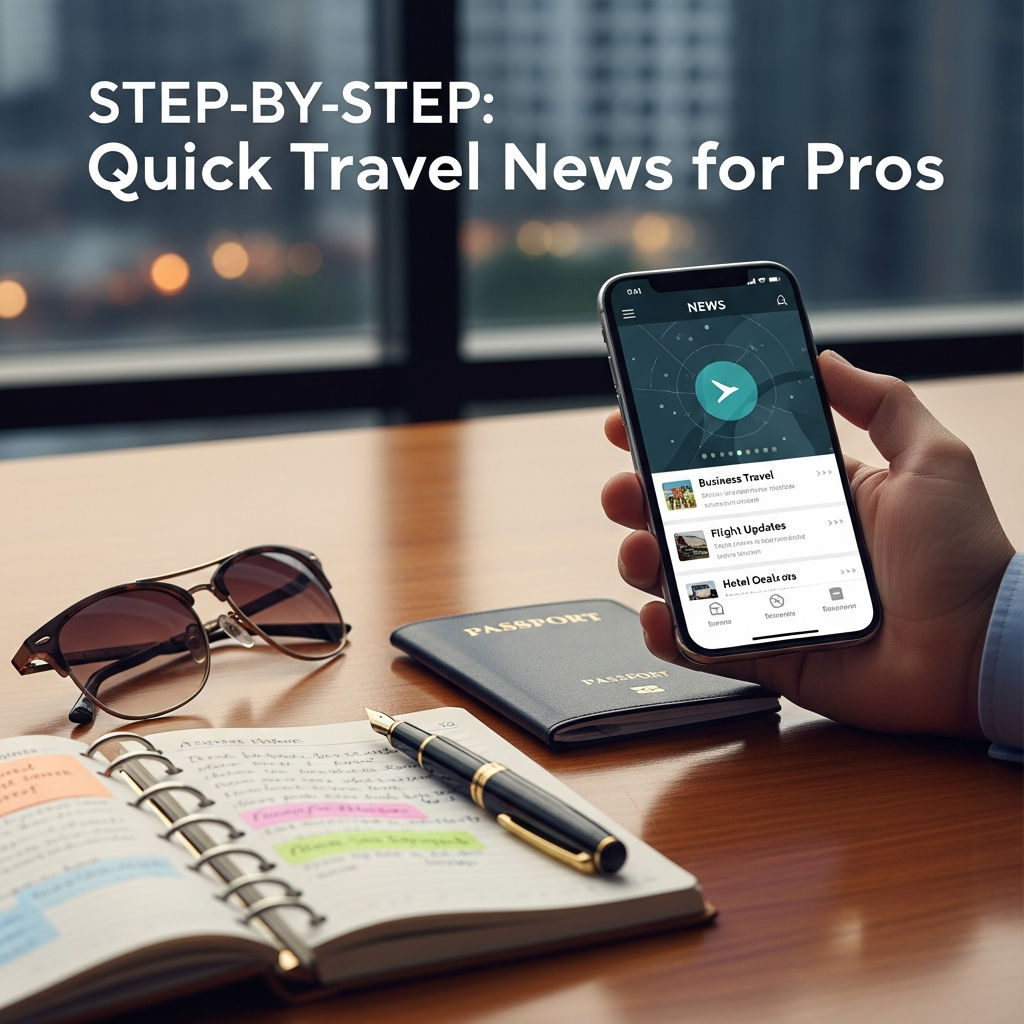
Step-by-Step: Quick Travel News for Pros
In the fast-paced world of global tourism, information is the most valuable currency. For travel agents, tour operators, and hospitality executives, staying ahead of the curve isn’t just about curiosity—it’s about survival. However, the sheer volume of “breaking news” can lead to information fatigue. To remain competitive, you need a streamlined process to filter out the noise and focus on what impacts your bottom line.
This guide provides a comprehensive, step-by-step framework for mastering travel news efficiently. By the end of this article, you will have a professional system to digest, analyze, and act on industry shifts in less than 30 minutes a day.
The Challenge: Information Overload in the Travel Sector
The travel industry is susceptible to rapid changes: geopolitical shifts, climate events, health regulations, and technological disruptions like AI and blockchain. A professional who relies on mainstream consumer news is already behind. Consumer outlets report on what is happening, whereas professionals need to know what will happen and how it affects logistics, pricing, and demand.
To transition from a passive reader to a proactive industry leader, follow these six essential steps.
Step 1: Curate a High-Authority Source List
Not all news is created equal. Your first step is to distinguish between B2C (Business-to-Consumer) and B2B (Business-to-Business) sources. While consumer sites are good for understanding traveler sentiment, B2B sites provide the data you need for decision-making.
Key B2B Categories to Follow:
- Industry Journals: Publications like Skift, PhocusWire, and Travel Weekly offer deep dives into market trends and corporate mergers.
- Regulatory Bodies: Follow updates from IATA (International Air Transport Association), UN Tourism (formerly UNWTO), and local government tourism boards.
- Niche Specialists: If you specialize in luxury, sustainability, or adventure travel, follow dedicated outlets like Luxury Travel Advisor or TTG Media.
Step 2: Automate Your Intelligence Gathering
Pros don’t spend hours searching for news; they make the news come to them. Using automation tools ensures that you never miss a critical update while you are busy managing clients or operations.
RSS Readers: Use tools like Feedly or Inoreader to aggregate all your favorite industry blogs and news sites into a single feed. You can categorize these by “Aviation,” “Hotels,” or “Tech.”
Google Alerts: Set up alerts for specific keywords relevant to your niche. For example, if you sell European cruises, set alerts for “Mediterranean port regulations” or “new cruise ship launches 2024.” This allows you to monitor specific developments without manual searching.
Step 3: Master the “15-Minute Morning Scan”
Consistency is more important than intensity. Set aside 15 minutes every morning to scan your curated feeds. The goal here isn’t to read every word, but to identify headlines that require further investigation.
The Scan Methodology:
- Headline Triage: Look for keywords like “regulation,” “acquisition,” “strike,” or “forecast.”
- The “So What?” Test: For every headline, ask: “Does this affect my current inventory, my future pricing, or my clients’ safety?” If the answer is no, move on.
- Save for Later: Use tools like Pocket or Instapaper to save long-form analysis pieces that you can read during downtime or your commute.
Step 4: Leverage Social Listening on Professional Networks
Social media, when used correctly, is a real-time radar for industry sentiment. For travel pros, LinkedIn and X (formerly Twitter) are the primary platforms for high-level updates.
On LinkedIn, follow industry thought leaders and join professional groups. This is often where the “news behind the news” happens—experts discussing the implications of a new airline merger or the impact of a new visa policy. On X, create “Private Lists” of airline CEOs, travel journalists, and meteorologists. This provides a focused stream of information without the distractions of general social media content.
Step 5: Verify and Cross-Reference
In the age of “clickbait,” travel news can sometimes be exaggerated or misinterpreted. Before you advise a client or change a booking strategy based on a headline, you must verify the source. A professional never relies on a single source for major news.
If you read about a new entry requirement for a country, cross-reference it with the official government website or the IATA Travel Centre. If you hear rumors of a hotel brand acquisition, look for the official press release on the company’s “Investor Relations” page. Verifying information builds your reputation as a reliable expert.
Step 6: Translate News into Actionable Insights
This is the step that separates the amateurs from the pros. News is useless if it doesn’t result in an action. Once you have consumed and verified a piece of travel news, you must determine how to use it to provide value.
Ways to Apply News to Your Business:
- Client Communication: Send a quick update or “News Flash” to clients who have active bookings in an affected area. It shows you are looking out for them.
- Content Marketing: Use a trending news topic as a hook for your next newsletter or blog post. Explaining “What the new EU entry rules mean for you” positions you as an authority.
- Strategic Pivoting: If news suggests an upcoming economic downturn in a specific region, you might shift your marketing budget toward more resilient markets.
The Role of Newsletters in Quick Consumption
If you are truly pressed for time, newsletters are your best friend. Many top-tier travel publications offer daily or weekly summaries curated by expert editors. These newsletters do the “Step 3” work for you by highlighting the most critical stories of the day.
Look for “The Daily” by Skift or the “Travel Alert” emails from major industry associations. These provide a distilled version of the global travel landscape, delivered directly to your inbox, often with expert commentary on why the news matters.
Conclusion: Building Your Information Competitive Advantage
Staying updated in the travel industry doesn’t have to be a full-time job. By curating your sources, automating your intake, and focusing on actionable insights, you can transform from someone who is overwhelmed by news into someone who uses news as a strategic tool.
Remember, the goal of “Quick Travel News for Pros” is efficiency. By spending a small amount of time each day refining your knowledge, you ensure that you are always the smartest person in the room—and the most prepared person for your clients. In an industry as volatile as travel, that is the ultimate professional advantage.